The site is working in test mode!
18 August, 2026   |   5 Rabī‘ al-awwal, 1448

Tashkent city
Fajr
04:08
Sunrise
05:35
Dhuhr
12:27
Asr
17:17
Maghrib
19:22
Isha
20:45
Bismillah
18 August, 2026, 5 Rabī‘ al-awwal, 1448

Tashkent

20.05.2020   78817   3 min.
Tashkent

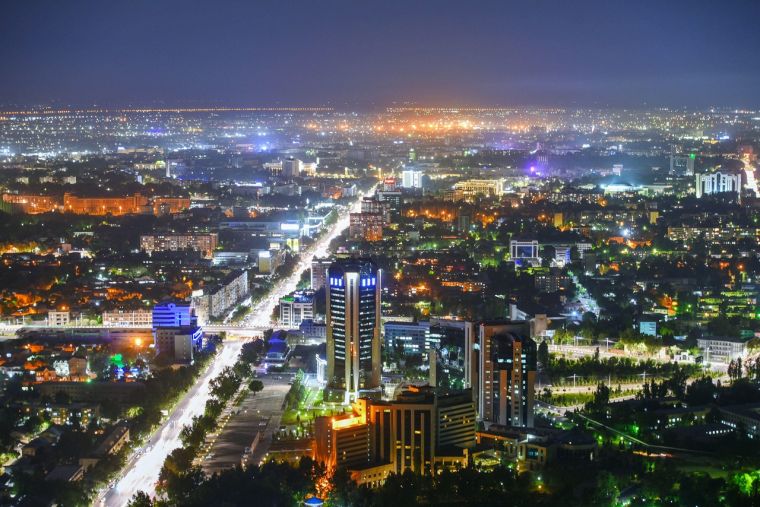
Tashkent - Capital of Uzbekistan General information about Tashkent Tashkent is the capital of Uzbekistan and is a metropolis of over 2.5 million people. The city is set out as a grid of straight, wide streets and avenues, interspersed with many green areas (parks, squares, and gardens) and fountains. This marvelous city embodies the modern elegance of many other capitals of the world; at the same time, as an eastern city, Tashkent has its own unique flavour. It tastefully combines medieval buildings that look like they're from the pages of ancient oriental tales, with elegant European architecture from the time of the Turkestan governorship, concrete 'blocks' from the Soviet era and, finally, sparkling high-rise commercial buildings made of glass and concrete that represent a new era of independent Uzbekistan. Tashkent, Uzbekistan – Picture

  Amir Temur Museum More pictures of Tashkent, Uzbekistan History of Tashkent Tashkent is one of the oldest cities on the Great Silk Road between China and Europe. The earliest references to Tashkent as a city settlement appeared in written sources in the 2nd century BC. In the Chinese annals the city is called Yueni or Shi; in the records of the Persian king, Shampur, it appears as Chach; and in other Arabic sources, Shash. The name Tashkent first appeared in Turkish documents of the 9th to 12th centuries. From ancient times, a favourable geographical position and mild climate made Tashkent one of the main Silk Road cities. In the 14-15th centuries it was the part of the Timurid Empire, and in the 16th century it was under the control of the Sheibanids dynasty. In 1865, after the conquest of Mikhail Chernyaev, Russian military leader, the city became under the rule of the Russian Empire and Russian government was established here. In 1930 Tashkent was declared the capital of Uzbekistan, former Uzbek SSR. Tashkent 

 What to do in Tashkent Tashkent sights Many of Tashkent's tourist sights are concentrated in the Old City, which is one of the few districts that has preserved its traditional culture in the rapidly-changing metropolis. The spirit of old Tashkent lives here, in the cozy courtyards of the hospitable mahallahs, the bustling Chorsu Bazaar, and the blue domes of the Khast Imam complex. In this part of the city there are artisans, teahouses, and bakeries. Other Tashkent sights worth visiting include the Tashkent TV Tower, the German Church, the Polish Church, Amir Temur Square with the famous Tashkent astronomical clock, Independence Square, and the former residence of Prince Romanov, which was designed by architects

   Prepeared by Imam Bukhari Tashkent Islamic Institute , Department of languages , English teacher     Kadirov Farrukh


Other posts
News

Uzbek scholars research the heritage of Babur and the Baburids in Pakistan

18.08.2026   8818   2 min.
Uzbek scholars research the heritage of Babur and the Baburids in Pakistan

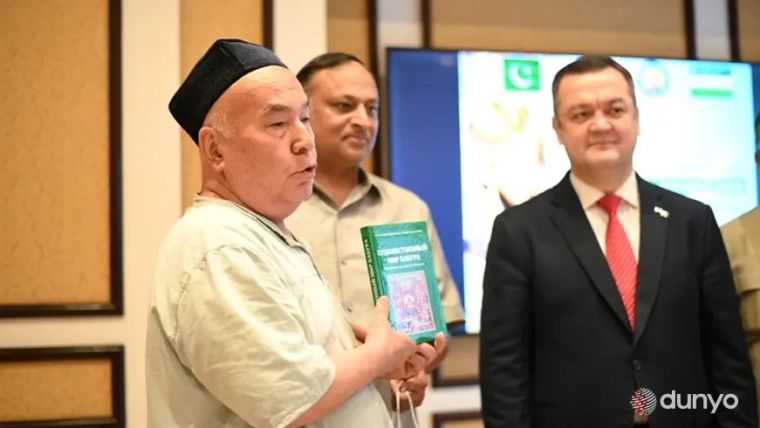
On the initiative of the Embassy of Uzbekistan in Pakistan, jointly with the Babur International Public Foundation, a visit of a delegation of Uzbek historians and Babur scholars took place, reports Dunyo IA.

Purpose of the trip is to study the historical and cultural heritage of Babur and the Baburids, historical sources, manuscripts, exhibits and artifacts preserved in Pakistan, as well as to develop scientific and cultural cooperation between the institutions of the two countries.

In Lahore, the delegation visited the Lahore Museum, Islamic Gallery, research institutions and historical monuments of the Baburid era. Issues of scientific and academic cooperation were discussed with the leadership of the University of the Punjab. Jointly with the Baburid Heritage Center at the university, a scientific and practical conference dedicated to the 500th anniversary of the Baburid dynasty was held.

In Islamabad, the Uzbek scholars visited the National Language Promotion Department of Pakistan, Quaid-i-Azam University, Allama Iqbal Open University, National Library of Pakistan and a number of scientific institutions, where they familiarized themselves with manuscripts, exhibits of the Baburid era, and other historical sources.

Delegation was also received by the Coordinator General of the OIC Standing Committee on Scientific and Technological Cooperation (COMSTECH), Muhammad Iqbal Choudhary.

The sides discussed deepening the study and preservation of the Baburid heritage, as well as its popularization within scientific circles and among the general public. An agreement was reached to hold a representative international scientific and practical conference.

The main event of the visit was the conference titled “Zahiriddin Muhammad Babur: Shared Civilizational Heritage and a Bridge of Uzbek-Pakistani Relations”.

Conference was attended by Farah Naz Akbar, Parliamentary Secretary for the Ministry of National Heritage and Culture of Pakistan; Alisher Tukhtaev, Ambassador of Uzbekistan; Ramzan Mughal, Head of the Babur Forum in Pakistan; as well as historians, Babur scholars and young researchers.

Participants emphasized the importance of the joint study of the historical and cultural heritage of Babur and the Baburids and the development of scientific ties between Uzbekistan and Pakistan.

As part of the further program of the delegation, research on a number of historical monuments of the Baburid era in the Punjab province is scheduled.