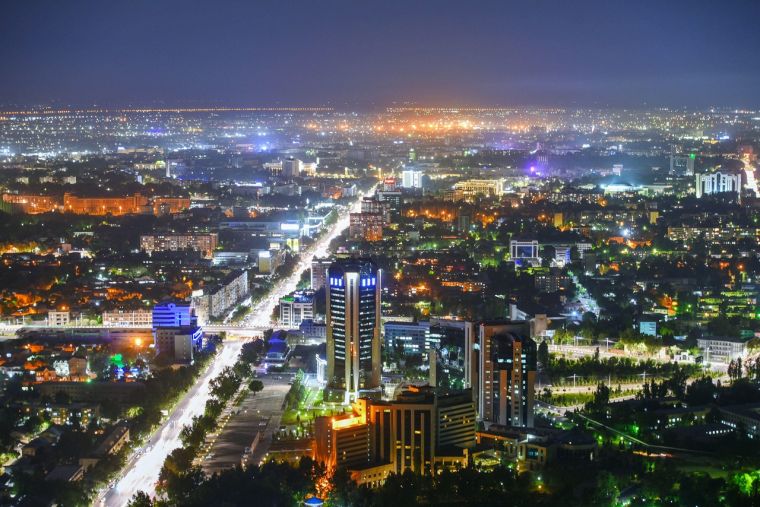
Tashkent - Capital of Uzbekistan General information about Tashkent Tashkent is the capital of Uzbekistan and is a metropolis of over 2.5 million people. The city is set out as a grid of straight, wide streets and avenues, interspersed with many green areas (parks, squares, and gardens) and fountains. This marvelous city embodies the modern elegance of many other capitals of the world; at the same time, as an eastern city, Tashkent has its own unique flavour. It tastefully combines medieval buildings that look like they're from the pages of ancient oriental tales, with elegant European architecture from the time of the Turkestan governorship, concrete 'blocks' from the Soviet era and, finally, sparkling high-rise commercial buildings made of glass and concrete that represent a new era of independent Uzbekistan. Tashkent, Uzbekistan – Picture
Amir Temur Museum More pictures of Tashkent, Uzbekistan History of Tashkent Tashkent is one of the oldest cities on the Great Silk Road between China and Europe. The earliest references to Tashkent as a city settlement appeared in written sources in the 2nd century BC. In the Chinese annals the city is called Yueni or Shi; in the records of the Persian king, Shampur, it appears as Chach; and in other Arabic sources, Shash. The name Tashkent first appeared in Turkish documents of the 9th to 12th centuries. From ancient times, a favourable geographical position and mild climate made Tashkent one of the main Silk Road cities. In the 14-15th centuries it was the part of the Timurid Empire, and in the 16th century it was under the control of the Sheibanids dynasty. In 1865, after the conquest of Mikhail Chernyaev, Russian military leader, the city became under the rule of the Russian Empire and Russian government was established here. In 1930 Tashkent was declared the capital of Uzbekistan, former Uzbek SSR. Tashkent
What to do in Tashkent Tashkent sights Many of Tashkent's tourist sights are concentrated in the Old City, which is one of the few districts that has preserved its traditional culture in the rapidly-changing metropolis. The spirit of old Tashkent lives here, in the cozy courtyards of the hospitable mahallahs, the bustling Chorsu Bazaar, and the blue domes of the Khast Imam complex. In this part of the city there are artisans, teahouses, and bakeries. Other Tashkent sights worth visiting include the Tashkent TV Tower, the German Church, the Polish Church, Amir Temur Square with the famous Tashkent astronomical clock, Independence Square, and the former residence of Prince Romanov, which was designed by architects
Prepeared by Imam Bukhari Tashkent Islamic Institute , Department of languages , English teacher Kadirov Farrukh
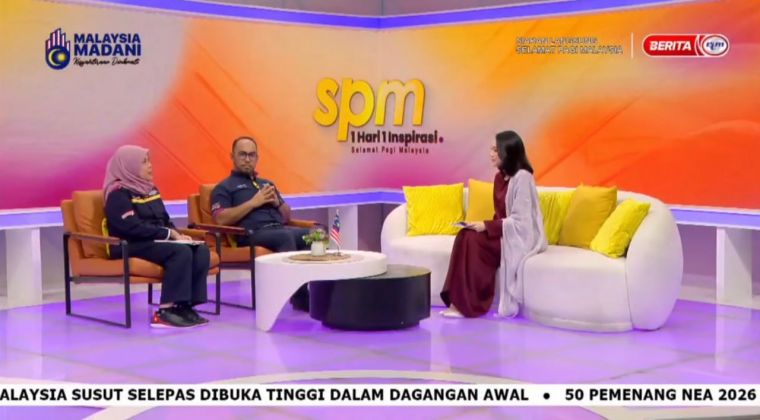
Ahead of the 35th Anniversary of Uzbekistan's Independence, a special report titled “New Uzbekistan – Center of Pilgrimage Tourism in the Digital World” was broadcast on the national television channel of Malaysia, “Berita RTM”, reports Dunyo IA.
Within the framework of the television report, Professor Badrul Bin Isa, Head of the Malaysian Academy of SME and Entrepreneurship Development (MASMED) at Universiti Teknologi MARA (UiTM), and Professor Norfadilah Kamaruddin, Dean of the university, presented the “Uzbekistan – Malaysia: Creative Tourism” initiative. The project is being implemented with the support of the Embassy of Uzbekistan, jointly with the Tourism Committee and the Center of Islamic Civilization.
Initiative involves creating professional digital content about Uzbekistan’s tourism potential using “visual storytelling”. From August 17th to 31st, a creative team from UiTM, consisting of professional photographers and designers from the faculties of art, design, and media, will conduct film and photo shoots in Tashkent, Samarkand, Bukhara and Khorezm. Primary focus will be placed on the cities' Islamic historical heritage and other landmarks of the country.
Prepared photo and video materials are planned to be distributed via “Instagram”, “Facebook”, “TikTok” and “YouTube”. Students from Uzbek higher education institutions specializing in design, art, tourism, and hospitality will also participate in the project. This will facilitate an exchange of experience in academic, tourism and creative spheres.
In the interview, Professor Badrul Bin Isa noted that the project is aimed at wider presentation of Uzbekistan among the Muslim population of the ASEAN countries. According to him, the digital platforms will be used to tell about the authentic historical heritage of the country, the opportunities of pilgrimage tourism, and modern transformations in Uzbekistan.
“We want Uzbekistan—a country with a rich Islamic heritage, high culture, and hospitable people—to be rediscovered by the residents of the ASEAN region”, Professor stated, also congratulating the people of Uzbekistan on the 35th Anniversary of Independence and expressing hope that the outcomes of the project would become a worthy gift for this milestone date.
Initiative is expected to contribute to the popularization of Uzbekistan’s pilgrimage tourism and attract a larger number of tourists from ASEAN countries.