Uzbek literature
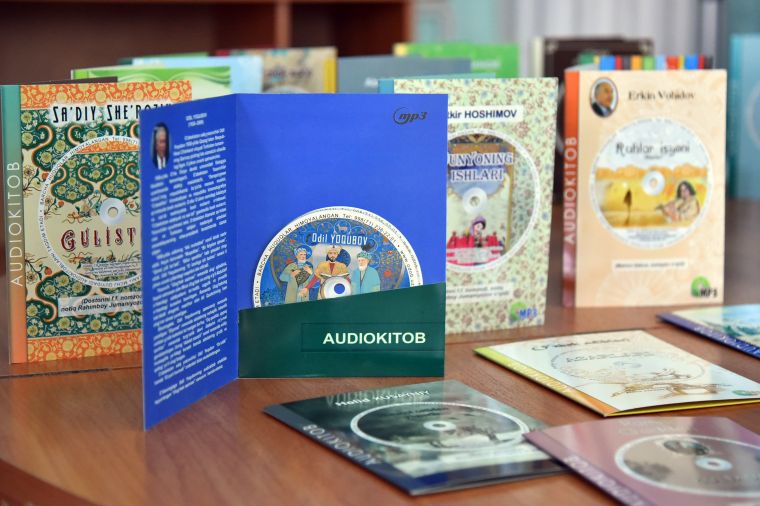
Uzbek literature Literature and art of Uzbekistan is called one of the bright and wonderful pages of the history of the world artistic culture. Along with Egypt and Mesopotamia, Greece and Rome, India and China, Central Asia laid the foundations of human civilization. The emergence of a cultural phenomenon in Uzbekistan is mainly due to its geographical Mesopotamia, where agricultural centers have been location in the Central Asian formed since ancient times. Uzbek literature history The most ancient Uzbek oral literary works are over 200 epic poems, many legends, epic songs performed by folk poets - bakhshi. Heroes of folklore struggle with hostile forces evil spirits, dragons. The oldest cycle of epic poems Ker-ogly and the poem Alpamysh were written around the 10th century. Alpamysh went in the folklore of all the peoples of Central Asia. It talks about the courage of folk heroes, courage and hatred of enemies; it contains many witty aphorisms, vivid metaphors, colorful descriptions. Another popular work from the cycle Ker-ogly is a poem about the transforming power of love of Ravshan-Hon. Many times later it was processed by folk poets. The satirical novels of Nasreddin Afandi, in which the khans and bais are derided, are popular. In the oral Uzbek literature, people of different nationalities - Chinese, Iranian, Turkmen, Negro, etc., female images are devoid of sentimentality. In the XI century, many works are created, based on religious norms of Islamic morality. These are the instructive poems "Kugadau Bilig" ("Knowledge of Grace" or "Science of Happiness") by Yusuf Khas Hadjib Balasaguni, the poem "Khibat al-Khakaik" ("Gift of Truths") by Ahmad Yugnaki.
Prepeared by Imam Bukhari Tashkent Islamic Institute , Department of languages , English teacher Kadirov Farrukh
Cultural Significance and Centuries-Old Traditions of the Uzbek Mahalla discussed at UNESCO

Facilitated by the Permanent Delegation of Uzbekistan to UNESCO, an online meeting was held between representatives of Uzbekistan and the Secretariat of the 2003 UNESCO Convention for the Safeguarding of the Intangible Cultural Heritage, dedicated to the cultural traditions and practices associated with the mahalla, as well as prospects for their promotion at the international level, reports Dunyo IA.
UNESCO Convention for the Safeguarding of the Intangible Cultural Heritage was adopted in 2003 and aims to safeguard living cultural traditions, customs, knowledge, skills and forms of cultural expression transmitted from generation to generation by communities. Operating within the framework of the Convention are the Representative List of the Intangible Cultural Heritage of Humanity, the List of Intangible Cultural Heritage in Need of Urgent Safeguarding and Register of Good Safeguarding Practices.
On behalf of UNESCO, the consultation was attended by Fumiko Ohinata, Secretary of the Convention for the Safeguarding of the Intangible Cultural Heritage and Nicholas Tan, Associate Programme Specialist responsible for the Asia and the Pacific region. Uzbek side was represented by officials from the Ministry of Foreign Affairs, the Mahalla Association of Uzbekistan, the National Commission for UNESCO and Permanent Delegation of the country to UNESCO.
During the meeting, the Uzbek side presented the centuries-old history of the mahalla, its special role in the life of society and its significance in preserving national traditions. It was emphasized that the mahalla is an integral part of the lifestyle of the people of Uzbekistan, uniting individuals on the basis of the principles of good neighbourliness, mutual assistance, solidarity and respect for the older generation.
Particular attention was paid to the cultural dimension of the mahalla. For centuries, it has served as a space where traditions are preserved directly in people's daily lives: holidays and important family events are celebrated collectively, customs of mutual assistance are maintained, intergenerational relations are strengthened and knowledge, values and life experience are transmitted to the youth.
Representatives of the UNESCO Secretariat reviewed the presented materials with great interest and noted the distinct nature of the social lifestyle centered around the mahalla in Uzbekistan. During the conversation, the significance of the traditions of community life, cultural interaction and the intergenerational transmission of heritage was emphasized as vital components of living intangible cultural heritage.
UNESCO experts also noted that the value of such traditions lies in their constant presence in people's lives. Cultural heritage within the mahalla is not limited to the preservation of individual customs but continues to manifest itself in daily interaction, relations between neighbours, collective events, and the participation of different generations in the life of the community.
During the exchange of views, it was noted that the experience of the mahalla reflects the way of organizing community life characteristic of Uzbekistan, where cultural values are preserved by the people themselves, further developed, and transmitted to subsequent generations. UNESCO representatives emphasized that such forms of interaction within local communities could be of significant interest in the context of the “living heritage” concept that underpins the 2003 Convention.
The role of Uzbekistan in promoting intangible cultural heritage and its contribution to enhancing international awareness of the diversity of living cultural traditions were separately highlighted. In this regard, the presented experience of the Uzbek mahalla generated significant interest among the Secretariat specialists.
Consultation held marked another step in developing cooperation between Uzbekistan and UNESCO on the preservation and international promotion of the country’s rich intangible cultural heritage, including the unique traditions and values formed within the institution of the mahalla.
