Uzbekistan has been included into the list of the most secured and trusted countries for US tourists.
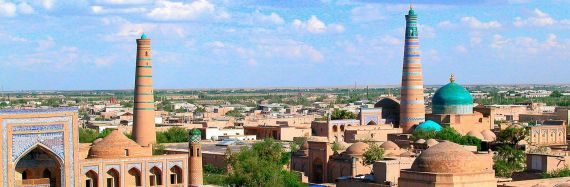
It is true that Uzbekistan is the center for historical buildings. Some of them are more than three thousand years. For example, “Hasti Imam” complex in Tashkent with it’s the first Quran of Usman dating to the VII century attracts thousands of tourists. There are many historical spots in Bukhara as well, one of them is Bakhauddin Naqshband memorial complex. Bahauddin Naqshband rahmatullahi alayh lived in XIV century and founded Naqshbandiya path of Sufism.
Notes for tourists……..
All efforts are being done to make better impression for tourists visiting Uzbekistan. For this reason a new initiatives are being put forward to develop tourism sphere. Starting from February 10th, 2018 the citizens form the following countries: Israel, Indonesia, Malaysia, South Korea, Turkey, Japan and Singapore can visit Uzbekistan for 30 days. For 39 countries visa procedures have been simplified. So, as a result 16 countries can visit Uzbekistan without entry visas.
Up to this day only 9 countries have been using non-visa entry status. Those countries were Azerbaijan, Armaniston, Belorussia, Georgia, Kazakhstan, Moldova, Russia and Kyrgyzstan.
Starting from 1st May, 2018 tourists are going to receive on arrival short term visas and later in summer E-visa is expected to be implemented. Then tourists would be able to do all procedures online including payment.
Besides, Uzbekistan Airlines, national air company is widening its routes in Scandinavia and South-East Asia with direct flight offers.
US State Department included Uzbekistan to the list of the most secure and trusted countries for US tourists on January 10, 2018.
These all proves that Uzbekistan will become one of the most attracted touristic countries in the world.
Press Service,
Muslim Board of Uzbekistan
Erhan Afyoncu: Uzbekistan is the land of the most magnificent cities of the Turkic civilization

Prominent Turkish historian, Rector of the National Defense University, Professor Erhan Afyoncu, speaking on the analytical program “Circle of Thought” (Akıl Çemberi) on the leading Turkish television channel “CNN-Türk”, shared his assessments regarding the rich historical heritage and tourism potential of Uzbekistan, reports Dunyo IA.
In his speech, Professor Afyoncu characterized Uzbekistan as a unique geography home to the most magnificent cities of the Turkic civilization. “Uzbekistan represents a distinct geography. It is the land where the most beautiful cities of our civilization are located. Samarkand, Bukhara, Khiva and Tashkent are situated precisely on this soil”, he noted.
Addressing the youth, the Turkish historian emphasized that in an era characterized by vast opportunities for international travel, it is vital to first discover the countries of the Turkic world and connect with the land of their ancestors. “My advice to the youth: since convenient opportunities for traveling abroad exist today, begin by traveling across the Turkic world. Go, see and connect with the ancestral soil. Only then should you visit the lands where the Seljuk state was established, the professor said, adding that such journeys are deeply beneficial for young people, enriching their historical memory and worldview. The level of beauty found in Samarkand cannot be encountered in many places around the world. It is exceptionally important for Turkish youth to see their own geography and their historical cities”, Erhan Afyoncu noted.
Professor also specifically highlighted Uzbekistan as one of the primary cradles of the Turkic civilization and a center of science, emphasizing that the country is highly attractive not only from historical and cultural perspectives but also from a geographical standpoint. Answering the question of the program host, Fulya Ozturk: “So for you, among the countries of the Turkic world, Uzbekistan comes first, correct?”, Professor Erhan Afyoncu stressed: “Naturally, Uzbekistan holds a special place...”.
This presentation by the professor will further contribute to the growing interest of the Turkish public in the historical cities, rich cultural heritage and tourism potential of Uzbekistan.