The mosque which has been closed for 20 years is being reconstructed in Namangan
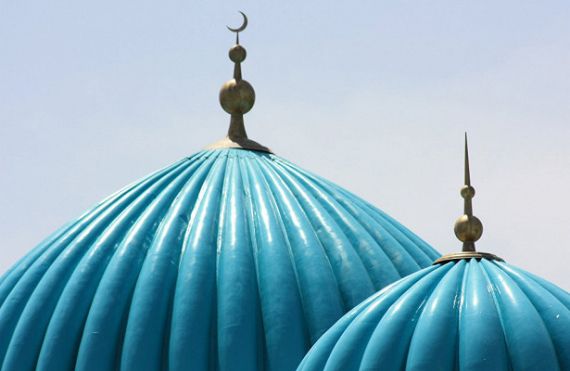
As a result of reforms in religious sphere, a number of mosques are being reopened and reconstructed.
One of such works has been done in Chust city of Namangan region. Prominent chef in Uzbekistan Bahriddin Chustiy notes the following:
Баҳриддин Чустий ижтимоий тармоқлардаги шахсий саҳифаси қуйидаги сўзларни ёзиб қолдирган:
“When I was young, there was the mosque on the way to my school. I used to listen to the beautiful azan (prayer for call) and elder people would bring the joy by their attendance. But, for some unknown reasons the mosques had been closed in 1998.”
Several attempts have been done to reopen this mosque for the past years, but all unsuccessful. Thanks to the initiatives of our President Shavkat Mirziyoyev, this mosque has also been permitted to reconstruct. There is hope that this mosque start functioning until the beginning of the Ramadan.
Press Service,
Muslim Board of Uzbekistan
“Arab Tourist”: Cities of Uzbekistan have historically been associated with trade routes known as the Silk Road

Tourism publication “Arab Tourist” has published an article dedicated to Uzbekistan, a unique country located in the heart of Central Asia and closely associated with the rich heritage of the Silk Road, reports Dunyo IA.
Publication highlights an interesting geographical feature: as a landlocked republic, Uzbekistan, together with Liechtenstein, is one of only two countries in the world that are completely surrounded by countries that are also landlocked.
Publication pays particular attention to the historical significance of the ancient cities along the Silk Road, which connected China with Central Asia, the Middle East and Europe. Samarkand, with its famous Registan Square, Bukhara, with its numerous mosques and madrasas and Khiva, with the ancient architectural complex of Itchan Kala, are presented as key centres of trade, science and Islamic civilisation, whose rich cultural heritage attracts travellers from around the world.
Article also describes the country’s unique natural and geographical diversity, ranging from the vast areas of the Kyzylkum Desert and the mountain ranges of the Tien Shan and Pamir-Alay to the fertile Fergana Valley. It highlights the important role of agriculture, specialising in the cultivation of cotton, grains, fruits and vegetables, and also addresses the region’s environmental challenges, including the fate of the Aral Sea.
“Arab Tourist” publication emphasises that modern Uzbek cities such as Tashkent, Samarkand, Bukhara, Khiva, Namangan and Andijan seamlessly combine the functions of administrative, economic and tourism centres, while carefully preserving the legacy of great historical figures in science, including the outstanding astronomer and mathematician Ulugh Beg.

- «
- »