The President reviews the reconstructed street featuring modern solutions

On October 15, President Shavkat Mirziyoyev visited Yakkasaray district of Tashkent city to inspect the results of the reconstruction of Shota Rustaveli Street.
The development of road infrastructure and the creation of convenient traffic conditions remain among the key priorities for the capital, whose population and urban area continue to grow rapidly. Consequently, modern roads and bridges are being built across Tashkent, while existing ones are being upgraded to meet contemporary standards.
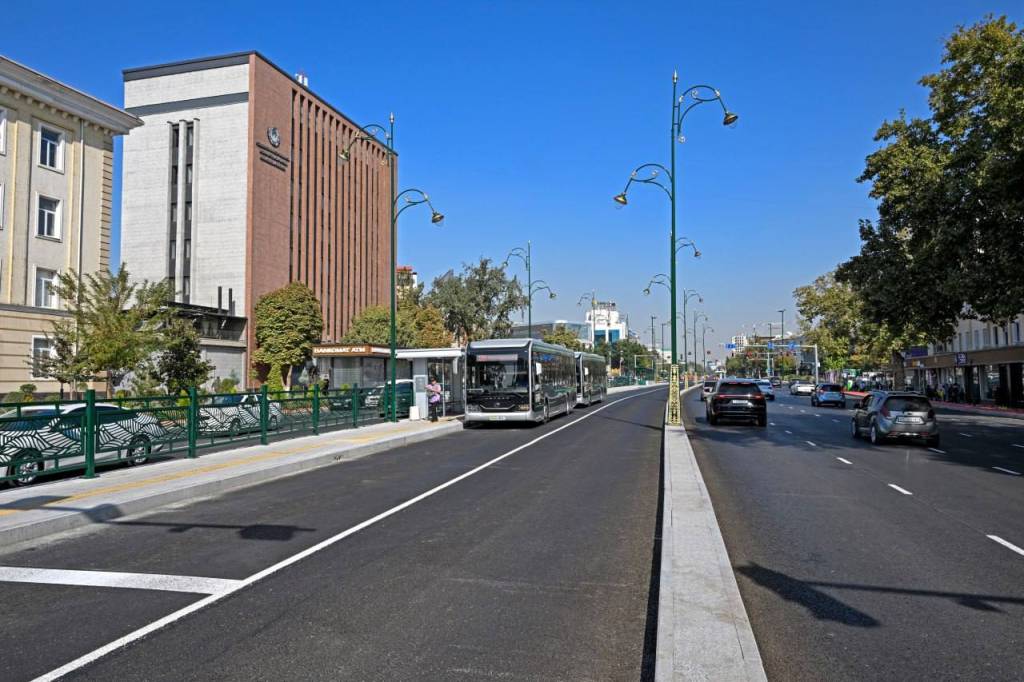
Shota Rustaveli Street, one of the city’s main arteries, connects several districts of Tashkent. To improve traffic flow, the section from Mirabad Street to Choshtepa Street, nearly 7 kilometers long, has been completely reconstructed.
The new layout includes 10 lanes: six for cars, two for public transport, and two designated for parking.
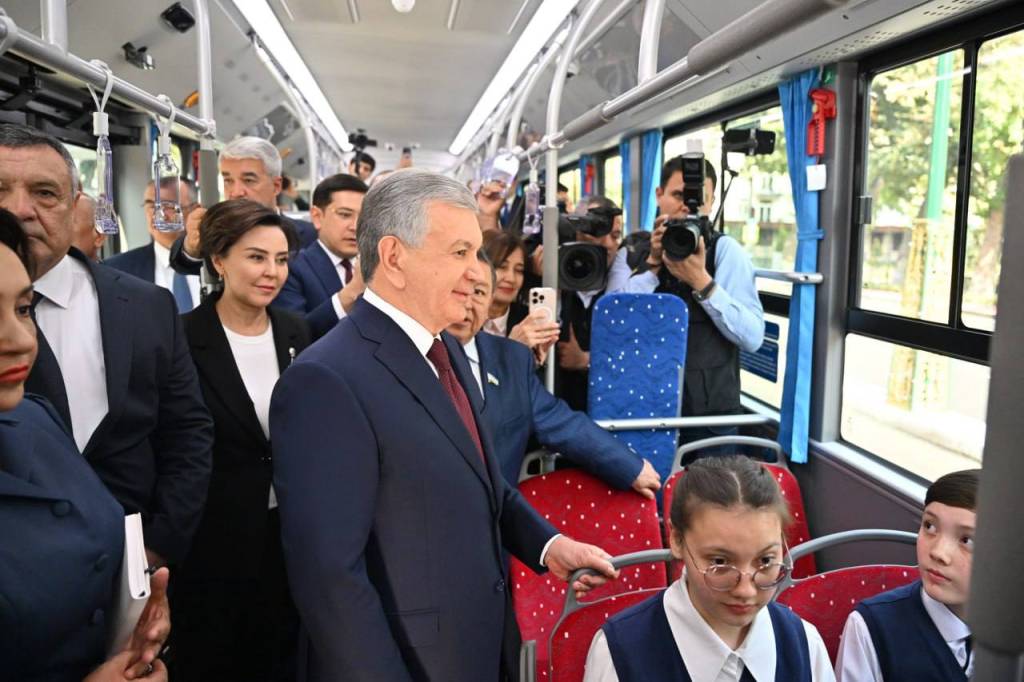
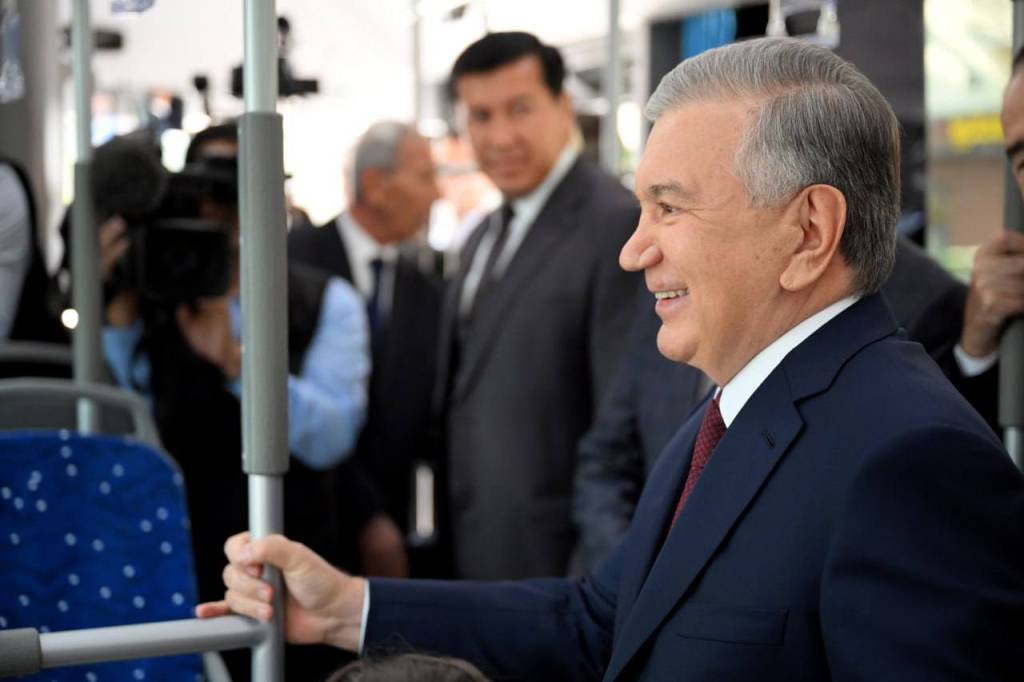
The President, accompanied by representatives of state agencies and public organizations, traveled by bus along the street, inspected the new features, and spoke with passengers about the improvements.
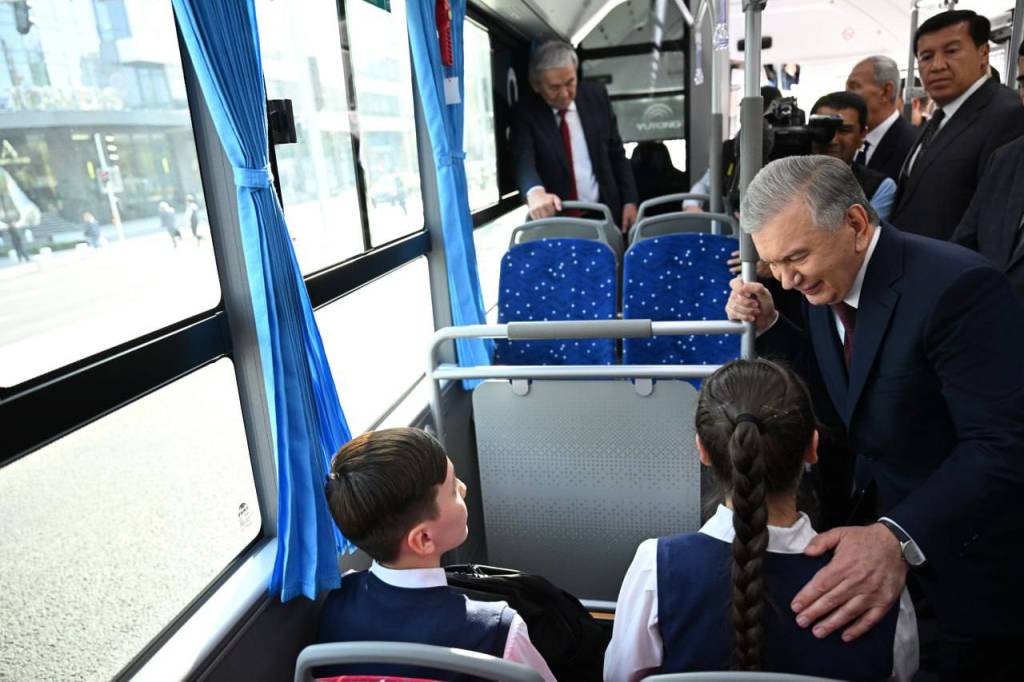
For the first time in Tashkent, a Bus Rapid Transit (BRT) system – dedicated lanes for public transport – has been introduced, drawing on the experience of developed countries. This innovation has significantly increased bus speed and passenger comfort.
As a result of the $19.2 million project, passenger flow rose from 2,500 to 6,000 people per hour. The road’s capacity reached 40,000 vehicles per day, while the average traffic speed increased from 23 to 30 kilometers per hour.
Most importantly, road safety improved markedly, with a significant reduction in traffic accidents.
Under the project, 21 new bus stops and 463 smart traffic lights were installed, and an intelligent transport management system was implemented. In addition, the street now features parking areas, bicycle lanes, green zones, and modern irrigation and drainage systems.
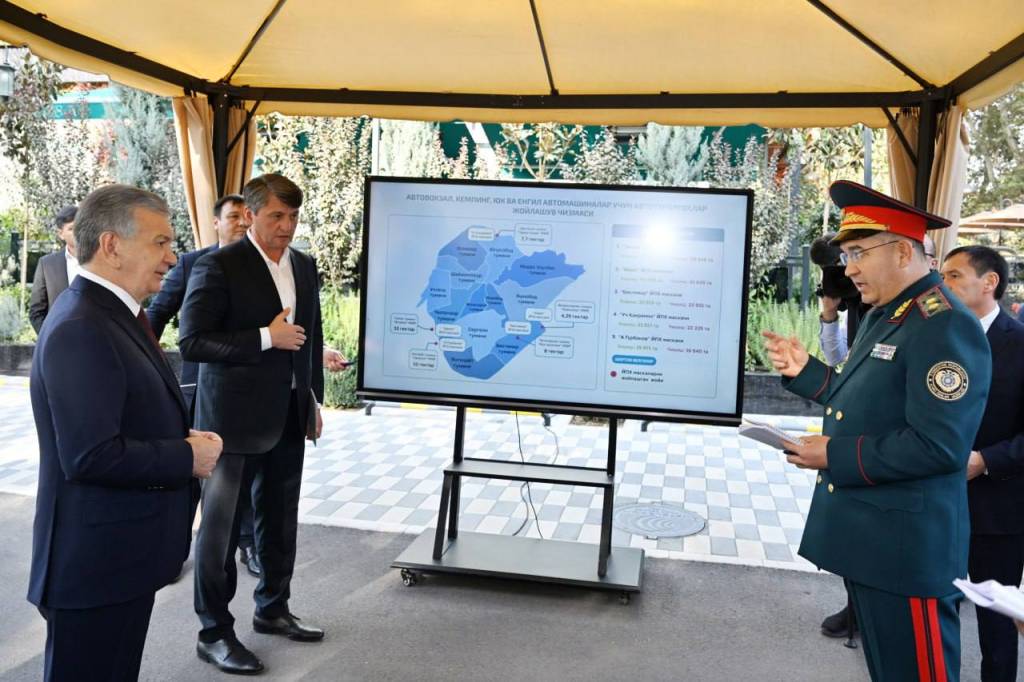
At the site, the President was also presented with projects to expand the network of dedicated bus lanes and to create new transport hubs around the capital.
“If we had not built new metro lines and purchased modern buses, traffic in Tashkent today would have become extremely difficult. That is why we are improving the roads and developing public transport to make life more convenient for people. We will continue this work in all our cities”, President Shavkat Mirziyoyev emphasized.
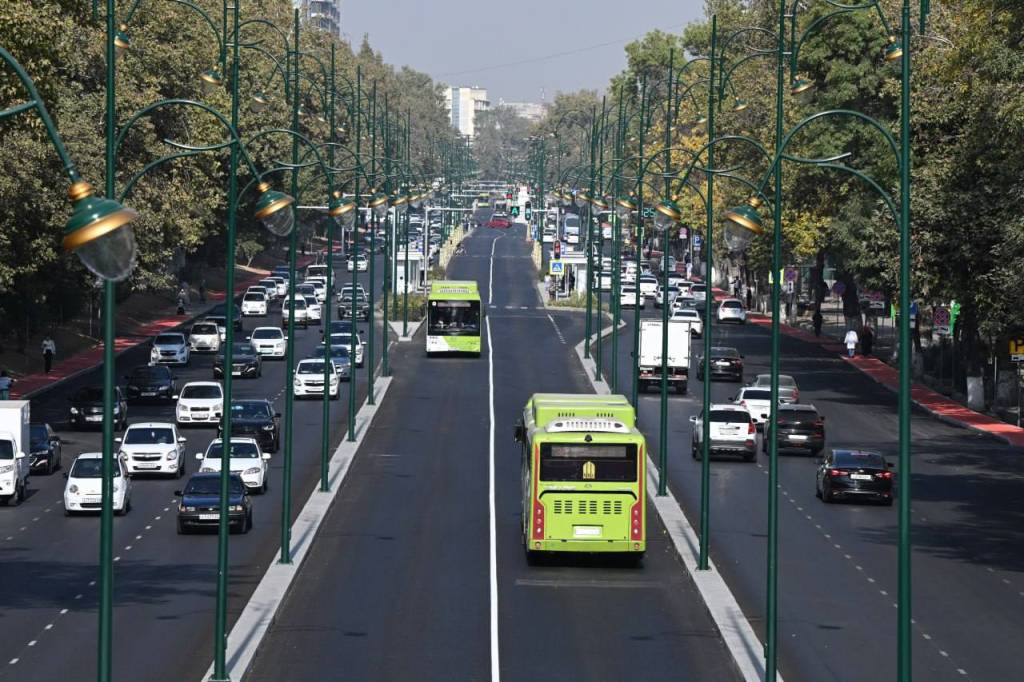
The President instructed responsible officials to improve public transport convenience, reduce traffic congestion, and ensure effective transport connectivity between Tashkent and New Tashkent.
The renovated Shota Rustaveli Street has not only beautified the capital but has also become a symbol of Tashkent’s transition toward a modern and intelligent transport system.
Saudi Minister: “I express my gratitude to President Shavkat Mirziyoyev for this important initiative”
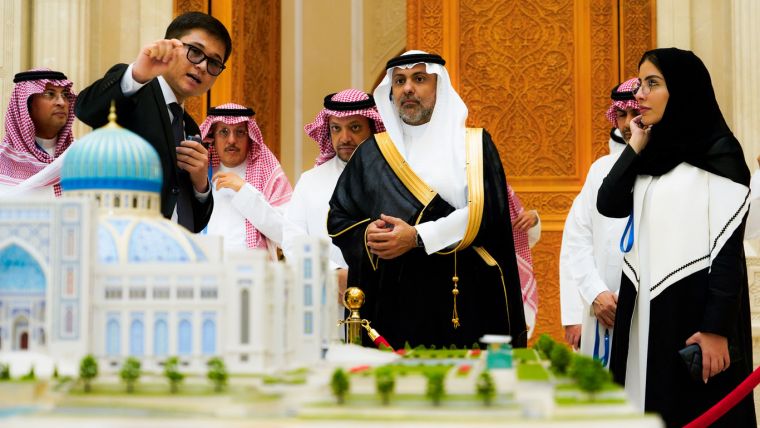
Saudi Arabia’s Minister of Health, Fahad Al-Jalajel, who visited the Islamic Civilization Center in Uzbekistan, emphasized that the complex, established at the initiative of President Shavkat Mirziyoyev, is creating a new environment for learning by seamlessly integrating history, science, and enlightenment in a modern format for future generations.
During his visit to the Islamic Civilization Center in Uzbekistan, Saudi Arabia’s Minister of Health, Fahad Al-Jalajel, toured the museum’s exhibitions, rare manuscripts, displays on the history of Islamic civilization, the rich scholarly legacy of great Muslim scholars, and exhibitions featuring advanced digital and interactive technologies.
During the visit, the distinguished guest explored the Center’s exhibitions showcasing the centuries-long development of Islamic civilization, its traditions of science and enlightenment, the invaluable contributions of scholars from Central Asia, particularly present-day Uzbekistan, to the advancement of global knowledge, as well as the large-scale reforms being implemented in New Uzbekistan to preserve and promote the nation’s cultural heritage.
Sharing his impressions of the Center, the senior Saudi official noted that the complex, established at the initiative of President Shavkat Mirziyoyev, plays a significant role in presenting the rich intellectual and spiritual heritage of Islamic civilization to the international community through modern museum practices and innovative exhibition concepts.
“Seeing the history of science and enlightenment that has evolved over centuries at the Islamic Civilization Center filled me with a profound sense of pride and admiration. Here, one can witness how civilization has developed in harmony with the passage of time. I would like to express my sincere gratitude to President Shavkat Mirziyoyev for making it possible to present this museum and its rich historical legacy to the world in a language that is accessible and understandable to all.
This Center provides the younger generation with a profound understanding of past civilizations, connects them with their own history, and demonstrates the enduring link between every historical era and today’s progress. We, your brothers and sisters in Saudi Arabia, are truly delighted to witness the remarkable reforms and achievements being realized in Uzbekistan,” he said.
According to Fahad Al-Jalajel, initiatives of this kind serve as an important foundation for strengthening cultural dialogue among nations, fostering a deeper appreciation of our shared civilizational heritage, and expanding international cooperation in the fields of science and enlightenment.