The Manuscript of the Uthmanic Mushaf at the Muslim Board of Uzbekistan Under Scholarly Study
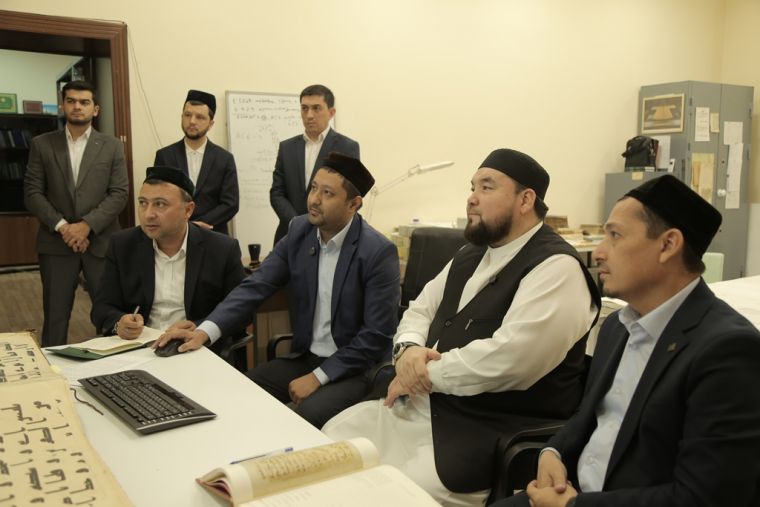
The manuscript of the Uthmanic Mushaf preserved at the Library of the Muslim Board of Uzbekistan is currently undergoing codicological examination.
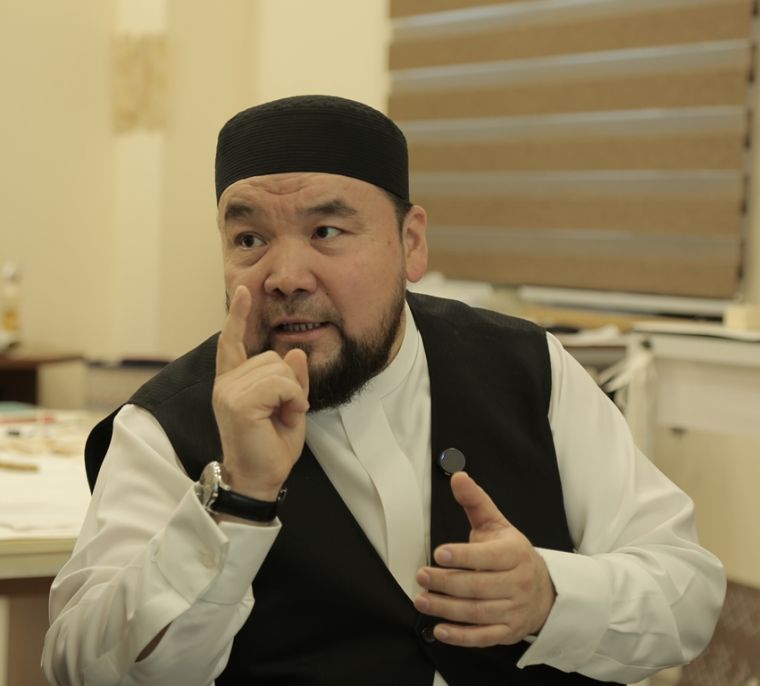
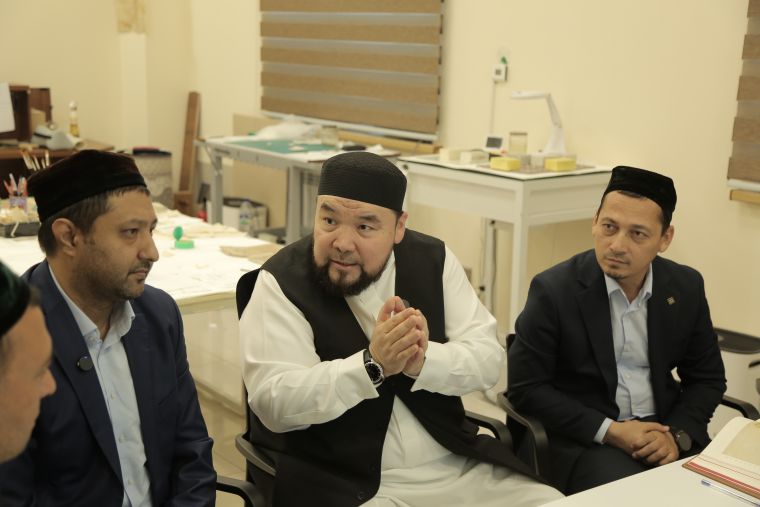
This research involves a team of scholars including Shaykh Alijon Qori Fayzullah, Head of the “Qur’an and Tajwid Education” Department; Kamoliddin Mahkamov, Head of the Library Department; and Jahongir Qori Nematov, Head of the “Qur’anic Studies” Department at Tashkent Islamic Institute.
Shaykh Alijon Qori Fayzullah emphasized the importance of observing accuracy and trustworthiness when studying and reproducing the script of the Mushaf. He highlighted significant rules of orthography and recitation (qira’at) related to the original handwriting of the Uthmanic Mushaf currently kept at the “Muhi Muborak” Madrasa Museum.
The digital copy of the original Uthmanic Mushaf serves as the main object of the study. In preparing the critical text, researchers also refer to other ancient copies of the Mushaf preserved in Turkey and the United Kingdom.
Each line of the manuscript is being carefully rewritten, with verse and line numbers marked in red. Any textual discrepancies found in the 19th-century copied version are noted in the margins and explained through scholarly commentary.
With the support of the Fund for the Development of Culture and Art of Uzbekistan, both local and international experts — including Dr. Christine Rose from the University of Cambridge, French restorers Achel Delaeau and Coralie Barbe, and Nil Baydar, Head of the Istanbul Manuscripts Workshop and Archive Department — have developed a phased restoration plan to ensure the long-term preservation of the sacred manuscript.
Press Service of the Muslim Board of Uzbekistan



“Uthaym” Newspaper: Enlightening development model of New Uzbekistan attracts the attention of the International Community
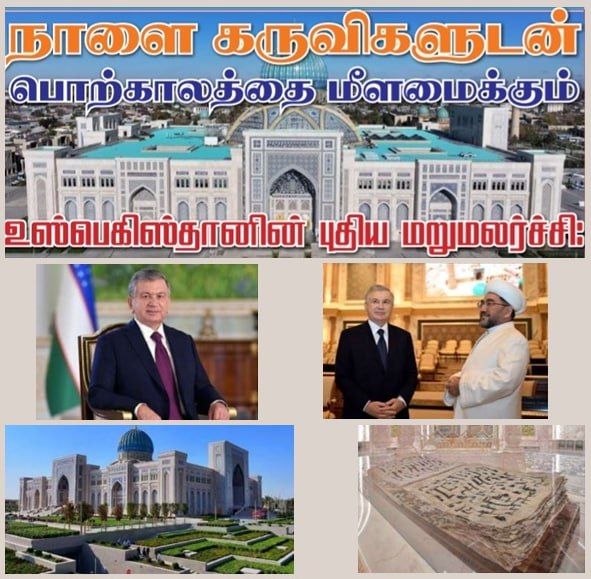
An analytical article dedicated to the rich historical and cultural heritage of Uzbekistan, as well as the state policy aimed at its preservation and transmission to future generations, has been published in the popular Sri Lankan newspaper “Uthaym”, reports Dunyo IA.
Publication highlights the reforms underway in New Uzbekistan to revive national values, protect cultural heritage sites and advance science and education.
As noted in the article, in recent years, one of the priority areas of Uzbekistan's state policy has become the comprehensive improvement of the spiritual and educational sphere, the deep study of the centuries-old scientific and cultural heritage of the people, and its wide popularization in the global community. It is emphasized that systemic work is being carried out in the country to restore historical monuments, modernize the activities of museums and archives, preserve and digitalize manuscript funds, as well as promote national cultural heritage on the international arena.
Particular attention in the article is paid to the initiative of the President of Uzbekistan Shavkat Mirziyoyev to implement the idea of the Third Renaissance, which is viewed as one of the key strategic directions of the country's development. According to the author, this concept is designed not only to ensure the preservation of historical heritage but also to facilitate the strengthening of the intellectual and spiritual potential of the state through the harmonious development of science, education, culture and innovation.
“In this sense, the concept of the Third Renaissance is viewed as a nationwide program aimed at reviving the great scientific traditions of Uzbekistan, raising an educated and patriotic young generation, as well as further strengthening the country's international prestige”, publication states.
Furthermore, the publication highlights Uzbekistan's cooperation with UNESCO and other international organizations in the field of cultural heritage protection, alongside the country's efforts to preserve historical monuments and harmoniously develop international tourism and scientific research.
As the “Uthaym” newspaper notes, enlightening development model of New Uzbekistan arouses growing interest and attracts increasingly close attention from the international community.

- «
- »