The site is working in test mode!
14 August, 2026   |   1 Rabī‘ al-awwal, 1448

Tashkent city
Fajr
04:02
Sunrise
05:31
Dhuhr
12:28
Asr
17:21
Maghrib
19:28
Isha
20:54
Bismillah
14 August, 2026, 1 Rabī‘ al-awwal, 1448

The Central Bank forecasts the emergence of at least 10 Islamic banks by 2030

28.10.2025   100944   4 min.
The Central Bank forecasts the emergence of at least 10 Islamic banks by 2030

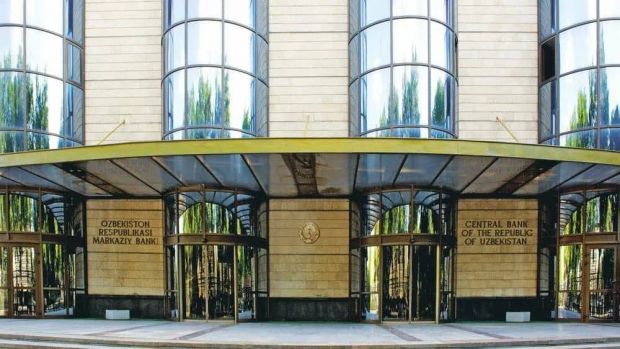
The Central Bank expects to establish at least 10 full-fledged Islamic banks by 2030. Also, “Islamic windows” — branches providing Sharia financial services — will appear in three state banks. The Central Bank considers Islamic finance as a tool for withdrawing funds from the shadow economy.

Why is this important

According to a UNDP survey, 68% of Uzbekistan’s population does not want to use traditional banking services due to religious beliefs. Launching Islamic banks will expand financial inclusion, increase bank assets, and reduce the share of the shadow economy. This is the largest transformation of the financial system since independence.

What happened

  • The Central Bank forecasts the emergence of at least 10 Islamic banks by 2030;
  • Three state banks (not yet defined) will create “Islamic windows”;
  • CB Deputy Chairman Abrorhuja Turdaliyev called Islamic finance a tool for bringing funds out of the shadows;
  • In September, the Legislative Chamber approved the law on Islamic banking activities in the first reading;
  • UNDP Survey: 68% of the population and 60% of businesses do not use traditional banks due to their religious beliefs.

Draft law

The document introduces the concepts of “Islamic banking activity”, “Islamic financial operations”, “investment deposit”, and others. A separate license is provided for Islamic banks. Classical banks will be able to organize “Islamic windows” if they have a license.

Islamic products: Murabaha (deferred trade financing), Mudaraba (investment partnership), Mushoraka (joint venture), Wakala (agency financing), Salam (prepayment of goods).

Features of regulation

  • Islamic banks will be able to conduct direct trade activities, establish legal entities, and acquire shares in the authorized capital without restrictions;
  • Islamic Finance Councils (Sharia Councils) will be established under the Central Bank and banks;
  • Notarial acts of Islamic banks are exempt from state duty;
  • A separate tax regime may be introduced, taking into account the specifics of Islamic finance.

Assessment of demand

The Deputy Chairman of the Central Bank clarified: when we talk about 50-60% of the population preferring Islamic finance, we are talking about those who prefer it. Those who categorically refuse traditional services are significantly fewer.

Context

Islamic finance prohibits the collection of interest (riba) and speculative operations. Instead, partnership models are used, where the bank and the client share profits and risks. Uzbekistan is a predominantly Muslim country (90%+ of the population), where a significant portion of citizens avoid traditional banks for religious reasons.

Creating 10 Islamic banks by 2030 is an ambitious task, given that there are currently around 35 commercial banks operating in the country. “Islamic windows” in state banks will allow large players (Uzpromstroybank, Halyk Bank, Asaka Bank) to enter a new segment of clients without creating separate structures.

The Central Bank sees Islamic finance as a tool for combating the shadow economy: religiously motivated citizens who do not trust traditional banks will be able to legalize funds through Sharia products.

A separate tax regime may include benefits for Murabaha-type operations, where the bank formally purchases goods and resells them to the client with a markup — to avoid double taxation.


Other posts
News

Uzbekistan to widely celebrate the 1,200th anniversary of Hakim Termizi’s birth

27.07.2026   42258   3 min.
Uzbekistan to widely celebrate the 1,200th anniversary of Hakim Termizi’s birth

Uzbekistan continues to consistently pursue a state policy aimed at the in-depth study, preservation, and broad promotion of the rich scholarly and spiritual heritage of its great scholars. As a logical continuation of these efforts, on 24 July 2026, the President of the Republic of Uzbekistan signed the Resolution “On the wide celebration of the 1,200th anniversary of the birth of our great compatriot, the distinguished scholar of hadith and Sufism, Hakim Termizi.” The Resolution provides for a comprehensive set of measures to promote in-depth research into Hakim Termizi’s scholarly legacy, expand public access to his works, and promote them internationally.

Hakim Termizi, who lived and worked in the ninth century, is regarded as one of the greatest scholars of Hadith, Qur’anic exegesis, and Sufism. His works have played a significant role in shaping Islamic spirituality, ethics, the concept of the ideal human being, and intellectual thought, earning enduring recognition throughout the Muslim world for centuries.

In accordance with the Resolution, an international scientific conference entitled “The contemporary significance of Hakim Termizi’s scholarly and spiritual legacy” will be held in the city of Termez in November 2026. Bringing together leading scholars from Uzbekistan and abroad, the conference will comprehensively examine the scholar’s intellectual heritage and his contribution to the development of Hadith studies, Sufism, and Islamic thought. The Resolution also provides for the publication of scholarly annotated academic translations of Hakim Termizi’s works, including Nawādir al-Uṣūl and Baḥr al-Tafsīr, as well as other sources related to his legacy, in Uzbek and foreign languages. These initiatives will further enhance international scholarly awareness of Hakim Termizi’s intellectual heritage.

As part of the Resolution, a series of publications dedicated to Hakim Termizi’s scholarly legacy will be prepared and published throughout 2026. To encourage the younger generation to study the scholar’s works in greater depth, the “Expert on the works of Hakim Termizi” competition will be organized among students of religious educational institutions in cooperation with the Muslim Board of Uzbekistan, with outstanding participants receiving awards. In addition, a national kurash tournament dedicated to Hakim Termizi’s memory will be held under the slogan “Mardlar Maydoni” to commemorate the 1,200th anniversary of his birth. This initiative is intended to promote national values, spirituality, and sport in a harmonious and integrated manner.

The Resolution represents another significant step toward preserving the legacy of Uzbekistan’s great ancestors and passing it on to future generations, while also promoting to the international community Uzbekistan’s invaluable contribution to the development of Islamic civilization. It creates new opportunities for the broader study and promotion of Hakim Termizi’s rich scholarly and spiritual heritage, recognizing it not only as a national treasure but also as an integral part of humanity’s shared intellectual and spiritual legacy.