The site is working in test mode!
22 August, 2026   |   9 Rabī‘ al-awwal, 1448

Tashkent city
Fajr
04:13
Sunrise
05:39
Dhuhr
12:26
Asr
17:13
Maghrib
19:16
Isha
20:38
Bismillah
22 August, 2026, 9 Rabī‘ al-awwal, 1448

The Central Bank forecasts the emergence of at least 10 Islamic banks by 2030

28.10.2025   108341   4 min.
The Central Bank forecasts the emergence of at least 10 Islamic banks by 2030

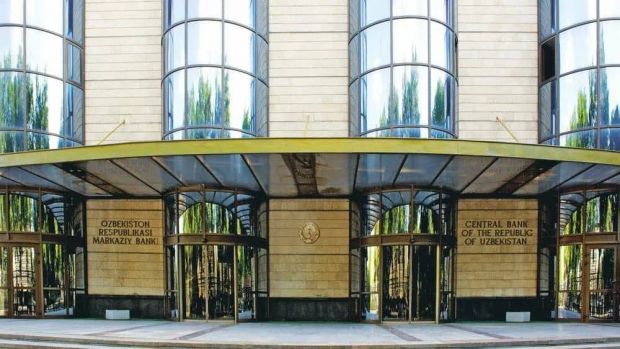
The Central Bank expects to establish at least 10 full-fledged Islamic banks by 2030. Also, “Islamic windows” — branches providing Sharia financial services — will appear in three state banks. The Central Bank considers Islamic finance as a tool for withdrawing funds from the shadow economy.

Why is this important

According to a UNDP survey, 68% of Uzbekistan’s population does not want to use traditional banking services due to religious beliefs. Launching Islamic banks will expand financial inclusion, increase bank assets, and reduce the share of the shadow economy. This is the largest transformation of the financial system since independence.

What happened

  • The Central Bank forecasts the emergence of at least 10 Islamic banks by 2030;
  • Three state banks (not yet defined) will create “Islamic windows”;
  • CB Deputy Chairman Abrorhuja Turdaliyev called Islamic finance a tool for bringing funds out of the shadows;
  • In September, the Legislative Chamber approved the law on Islamic banking activities in the first reading;
  • UNDP Survey: 68% of the population and 60% of businesses do not use traditional banks due to their religious beliefs.

Draft law

The document introduces the concepts of “Islamic banking activity”, “Islamic financial operations”, “investment deposit”, and others. A separate license is provided for Islamic banks. Classical banks will be able to organize “Islamic windows” if they have a license.

Islamic products: Murabaha (deferred trade financing), Mudaraba (investment partnership), Mushoraka (joint venture), Wakala (agency financing), Salam (prepayment of goods).

Features of regulation

  • Islamic banks will be able to conduct direct trade activities, establish legal entities, and acquire shares in the authorized capital without restrictions;
  • Islamic Finance Councils (Sharia Councils) will be established under the Central Bank and banks;
  • Notarial acts of Islamic banks are exempt from state duty;
  • A separate tax regime may be introduced, taking into account the specifics of Islamic finance.

Assessment of demand

The Deputy Chairman of the Central Bank clarified: when we talk about 50-60% of the population preferring Islamic finance, we are talking about those who prefer it. Those who categorically refuse traditional services are significantly fewer.

Context

Islamic finance prohibits the collection of interest (riba) and speculative operations. Instead, partnership models are used, where the bank and the client share profits and risks. Uzbekistan is a predominantly Muslim country (90%+ of the population), where a significant portion of citizens avoid traditional banks for religious reasons.

Creating 10 Islamic banks by 2030 is an ambitious task, given that there are currently around 35 commercial banks operating in the country. “Islamic windows” in state banks will allow large players (Uzpromstroybank, Halyk Bank, Asaka Bank) to enter a new segment of clients without creating separate structures.

The Central Bank sees Islamic finance as a tool for combating the shadow economy: religiously motivated citizens who do not trust traditional banks will be able to legalize funds through Sharia products.

A separate tax regime may include benefits for Murabaha-type operations, where the bank formally purchases goods and resells them to the client with a markup — to avoid double taxation.

Other posts
News

“Al-Ahram Weekly”: Uzbekistan reclaims its status as a global cultural hub

14.07.2026   55738   3 min.
 “Al-Ahram Weekly”: Uzbekistan reclaims its status as a global cultural hub

Egyptian publication “Al-Ahram Weekly” has published an article titled “Uzbekistan’s cultural renaissance: How the Silk Road Civilization is reclaiming its voice on the global stage”, highlights the country's cultural revival, the development of the creative economy and the expansion of international cultural cooperation, reports Dunyo IA.

Publication notes that for centuries, Uzbekistan sat at the very heart of the Great Silk Road, connecting the civilizations, religions and cultures of Asia, the Middle East and Europe and today, it is once again capturing the attention of the global community.

According to Gayane Umerova, Head of the Department of Creative Economy and Tourism of the Administration of the President of Uzbekistan, under the initiative of President Shavkat Mirziyoyev, culture, tourism and the creative economy are envisioned as fundamental pillars of the nation’s future, alongside infrastructure and industry. This approach, as noted, defines the state mandate to open Uzbekistan to the world and to welcome the world back to Uzbekistan.

Publication highlights that the nation's strategy extends beyond restoring historical sites to establishing new cultural platforms, including the Bukhara Biennial, the Center for Contemporary Art in Tashkent, the future Jadid Heritage Museum and international exhibition participation. This approach signifies a multifaceted cultural development policy.

Publication separately underscores the development of the creative economy and its nexus with cultural diplomacy and the nation’s investment attractiveness. It notes that every major cultural initiative in Uzbekistan is originally designed with a strategic focus on tourism development and investment attraction, including the “Samarkand Express” project, implemented in partnership with the Italian company “Arsenale Group”.

Publication also highlights the international acclaim received by Uzbekistan’s cultural projects, including the nation’s “Garden of Knowledge” pavilion at “Expo 2025 Osaka”, which was honored with the prestigious “Red Dot: Best of the Best” award.

Particular emphasis is placed on the preservation of Uzbekistan’s Islamic heritage, the advancement of museum infrastructure and the implementation of projects aimed at integrating historical legacy into the contemporary cultural context, including the Bukhara master development plan designed by the “Wilmotte & Associés” architectural bureau.

A dedicated section of the article focuses on Uzbekistan’s cultural cooperation with Egypt and the Arab world. It notes that the sides are discussing prospects for interaction in the fields of museum management, tourism, and cultural heritage preservation, alongside the development of institutional partnerships.

According to the publication, a highly symbolic milestone was the election of Professor Khaled El-Anany as Director-General of UNESCO during the 43rd session of the organization’s General Conference, which took place in Samarkand.

In conclusion, it underscores that Uzbekistan is envisioned as a nation that remains profoundly loyal to its traditions while simultaneously advancing modern cultural and creative industries, thereby strengthening international cultural cooperation.