The site is working in test mode!
15 August, 2026   |   2 Rabī‘ al-awwal, 1448

Tashkent city
Fajr
04:04
Sunrise
05:32
Dhuhr
12:28
Asr
17:20
Maghrib
19:27
Isha
20:52
Bismillah
15 August, 2026, 2 Rabī‘ al-awwal, 1448

Gandhi Praised Caliphs Abu Bakar and Umar as Role Models in His 1937 Newspaper

28.10.2025   113301   2 min.
Gandhi Praised Caliphs Abu Bakar and Umar as Role Models in His 1937 Newspaper

In the July 27, 1937 issue of his weekly journal Harijan, Mahatma Gandhi praised Islamic Caliphs Abu Bakar (RA) and Umar Farooq (RA) as examples of humble and responsible leadership.

In a rare reference to Islamic history, Mahatma Gandhi praised Caliphs Abu Bakar and Umar Farooq as examples of simple and honest leadership.

He made this statement in the July 27, 1937 issue of his weekly journal, Harijan, offering advice to Indian National Congress leaders as they began to hold public office.

In that issue of Harijan, Gandhi wrote:

“I cannot give you the reference of Ram Chandar or Krishna, because they were not considered as historical figures. I cannot help it but to present to you the names of (Hazrat) Abu Bakar (RA) and (Hazrat) Umar Farooq (RA). They were leaders of a vast Empire, yet they lived a life of austerity.” Harijan – Dated: 27.07.1937

This statement came during an important moment in India’s history. In 1937, the Indian National Congress formed governments in several provinces for the first time under British rule, following elections held under the Government of India Act, 1935.

Gandhi, always cautious about the moral health of leaders, urged Congress members not to be consumed by power or luxury. He used the examples of Caliphs Abu Bakar and Umar Farooq to remind them that true leaders live simply and serve the people.

Harijan was Gandhi’s weekly newspaper, launched in 1933 to support his social reform campaigns — especially against untouchability. The journal regularly featured Gandhi’s views on religion, politics, and ethics.

The journal was published in English, along with versions in Hindi (Harijan Sewak) and Gujarati (Harijanbandhu), and ran until 1955.

This was not the only time Gandhi showed appreciation for Islamic values. He often quoted the Quran, Prophet Muhammad (PBUH), and his companions in speeches and writings.


Gandhi Praised Caliphs Abu Bakar and Umar as Role Models in His 1937 Newspaper
Other posts
News

Saudi Press: Uzbekistan plays an important role in the revival of Islamic Science and Cultural Heritage

20.07.2026   43994   2 min.
Saudi Press: Uzbekistan plays an important role in the revival of Islamic Science and Cultural Heritage

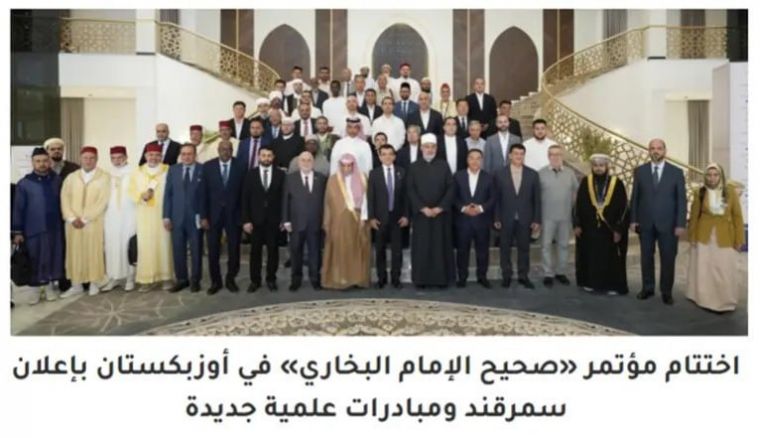
Analytical materials dedicated to the 1st  International Forum of Islamic Civilization held in Uzbekistan, as well as the initiatives put forward within its framework, have been published in the authoritative media of Saudi Arabia, reports Dunyo IA.

In particular, “Al-Watan” newspaper presented the First International Forum of Islamic Civilization not merely as a traditional academic meeting, but as a large-scale historical project aimed at the revival of Islamic culture. In the publication, Uzbekistan is recognized as one of the most important historical cradles of the Islamic world.

UNA” Information Agency paid special attention to the reforms in the religious and educational sphere implemented at the initiative of the President of Uzbekistan Shavkat Mirziyoyev.

It is emphasized that the restoration and study of the rich spiritual and cultural heritage in the country has been elevated to the rank of state policy. It is noted that the Samarkand Declaration, adopted following the forum, as well as the new scientific initiatives proposed on its basis, will be of great importance for the preservation of the traditions of Hadith studies and Islamic heritage.

Saudi media also detailed the Center for Islamic Civilization of Uzbekistan. It is noted that the Center is a modern scientific and educational institution designed to study, preserve and popularize the Islamic culture, scientific heritage, and spiritual values of the country.

Center's exposition includes materials on the lives and scientific heritage of great scholars born on the territory of modern Uzbekistan, rare manuscripts, ancient copies of the Quran, archaeological finds, historical documents, works of art, as well as modern interactive multimedia exhibitions.