Gandhi Praised Caliphs Abu Bakar and Umar as Role Models in His 1937 Newspaper

In the July 27, 1937 issue of his weekly journal Harijan, Mahatma Gandhi praised Islamic Caliphs Abu Bakar (RA) and Umar Farooq (RA) as examples of humble and responsible leadership.
In a rare reference to Islamic history, Mahatma Gandhi praised Caliphs Abu Bakar and Umar Farooq as examples of simple and honest leadership.
He made this statement in the July 27, 1937 issue of his weekly journal, Harijan, offering advice to Indian National Congress leaders as they began to hold public office.
In that issue of Harijan, Gandhi wrote:
“I cannot give you the reference of Ram Chandar or Krishna, because they were not considered as historical figures. I cannot help it but to present to you the names of (Hazrat) Abu Bakar (RA) and (Hazrat) Umar Farooq (RA). They were leaders of a vast Empire, yet they lived a life of austerity.” Harijan – Dated: 27.07.1937
This statement came during an important moment in India’s history. In 1937, the Indian National Congress formed governments in several provinces for the first time under British rule, following elections held under the Government of India Act, 1935.
Gandhi, always cautious about the moral health of leaders, urged Congress members not to be consumed by power or luxury. He used the examples of Caliphs Abu Bakar and Umar Farooq to remind them that true leaders live simply and serve the people.
Harijan was Gandhi’s weekly newspaper, launched in 1933 to support his social reform campaigns — especially against untouchability. The journal regularly featured Gandhi’s views on religion, politics, and ethics.
The journal was published in English, along with versions in Hindi (Harijan Sewak) and Gujarati (Harijanbandhu), and ran until 1955.
This was not the only time Gandhi showed appreciation for Islamic values. He often quoted the Quran, Prophet Muhammad (PBUH), and his companions in speeches and writings.

Şeyda Sağlam: Samarkand reflects grandeur, while Bukhara speaks to the human spirit
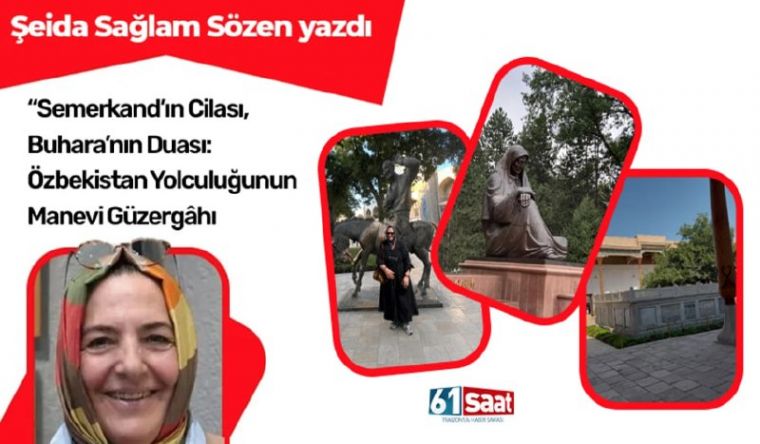
Turkish art historian and researcher Şeyda Sağlam published an article on the popular website “61 Saat” about the potential of Uzbekistan in the sphere of pilgrimage tourism, in which she shared her impressions of a trip through the historical cities of the country, reports Dunyo IA.
In the article “The Polish of Samarkand, The Prayer of Bukhara: The Spiritual Route of the Journey to Uzbekistan”, author noted that the journey through Tashkent, Samarkand, Bukhara and Khiva became for her not just a visit to cities, but an acquaintance with the historical and spiritual centers of the region.
According to the researcher, Samarkand impresses with its architectural heritage, Registan Square, Amir Temur Mausoleum, Bibi-Khanym Mosque, Shah-i-Zinda complex and the heritage of the scholar Imam Maturidi. She emphasized that the city reflects the grandeur of ancient civilizations and the role of science in the history of Central Asia.
Şeyda Sağlam paid special attention to Bukhara, noting its spiritual atmosphere and significance as one of the centers of Islamic culture. Among the places that made an impression on her, she named the Kalyan Minaret, the Ismail Samani Mausoleum, the Bahauddin Naqshband complex and the Ark Citadel.
“Samarkand is a city of outward grandeur, while Bukhara speaks to the human spirit”, the researcher noted.
Article became another publication in the Turkish media aimed at promoting the tourism potential of Uzbekistan, in particular, its opportunities in the sphere of cultural and pilgrimage tourism.
