News
Şeyda Sağlam: Samarkand reflects grandeur, while Bukhara speaks to the human spirit
17.07.2026
59960
2 min.
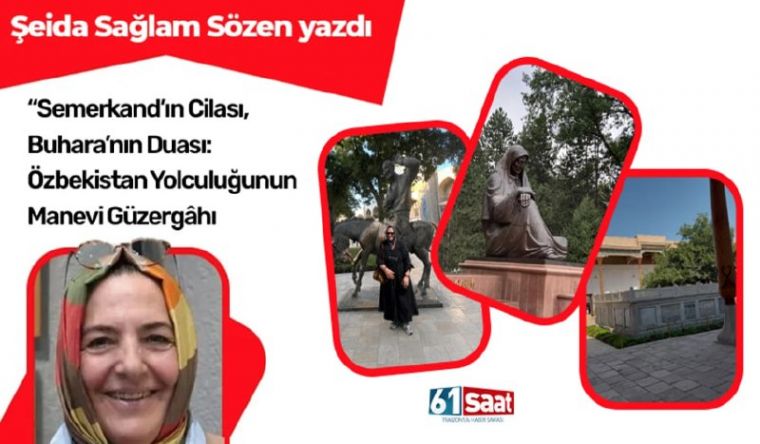
Turkish art historian and researcher Şeyda Sağlam published an article on the popular website “61 Saat” about the potential of Uzbekistan in the sphere of pilgrimage tourism, in which she shared her impressions of a trip through the historical cities of the country, reports Dunyo IA.
In the article “The Polish of Samarkand, The Prayer of Bukhara: The Spiritual Route of the Journey to Uzbekistan”, author noted that the journey through Tashkent, Samarkand, Bukhara and Khiva became for her not just a visit to cities, but an acquaintance with the historical and spiritual centers of the region.
According to the researcher, Samarkand impresses with its architectural heritage, Registan Square, Amir Temur Mausoleum, Bibi-Khanym Mosque, Shah-i-Zinda complex and the heritage of the scholar Imam Maturidi. She emphasized that the city reflects the grandeur of ancient civilizations and the role of science in the history of Central Asia.
Şeyda Sağlam paid special attention to Bukhara, noting its spiritual atmosphere and significance as one of the centers of Islamic culture. Among the places that made an impression on her, she named the Kalyan Minaret, the Ismail Samani Mausoleum, the Bahauddin Naqshband complex and the Ark Citadel.
“Samarkand is a city of outward grandeur, while Bukhara speaks to the human spirit”, the researcher noted.
Article became another publication in the Turkish media aimed at promoting the tourism potential of Uzbekistan, in particular, its opportunities in the sphere of cultural and pilgrimage tourism.
SHARE INFORMATION ON SOCIAL NETWORKS



 Iman
Iman  Prayer
  Fasting
  Zakat
Zakat  Haj
Haj  Qur`an
  Lessons of Islam
  Contact