Malaysian Delegation Visits the Muslim Board of Uzbekistan

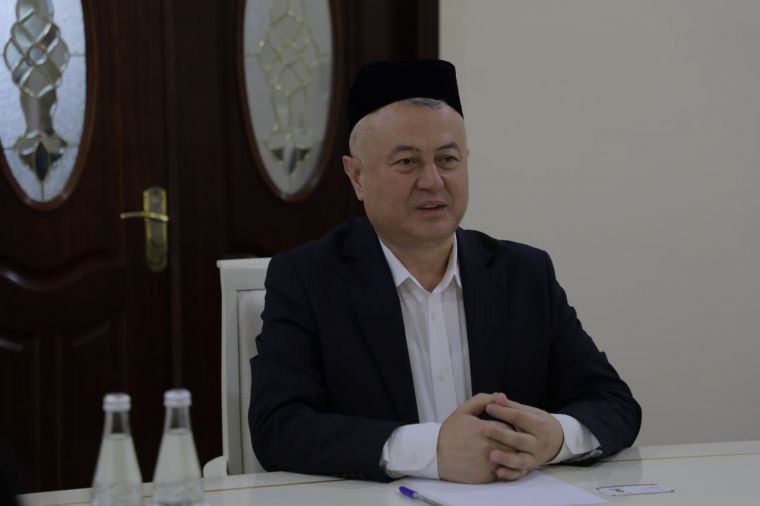
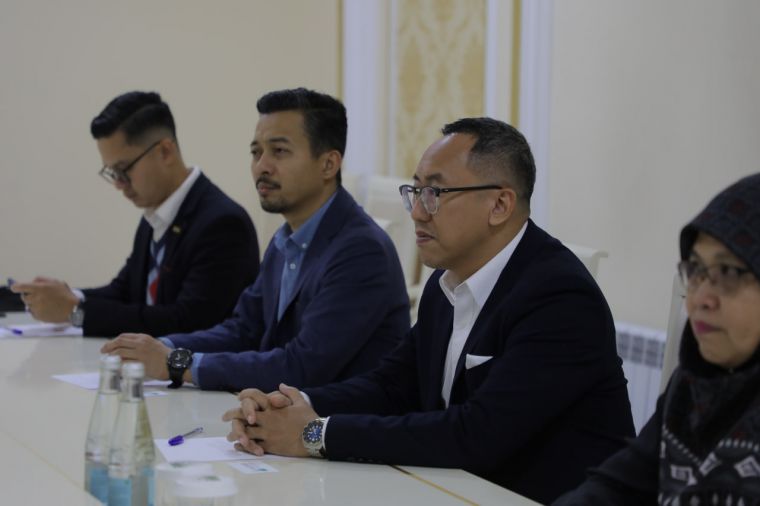
The Muslim Board of Uzbekistan hosted a meeting with a delegation from the Institute of Islamic Studies under Tun Hussein Onn University of Malaysia, led by its director Khairun Nizam.
The guests were welcomed by Deputy Chairman of the Muslim Board of Uzbekistan, Muhammadolim Muhammad Siddiqov, who congratulated them on their visit and briefed them on the structure and activities of the Board, particularly the Department of Education and Scientific Research.
The delegation expressed appreciation for the significant progress taking place in Uzbekistan in recent years in the fields of religion, culture, and tourism, and noted with admiration the establishment of the Center for Islamic Civilization, the reconstruction and beautification of the Imam al-Bukhari Complex, and the development of other higher religious educational institutions such as Mir Arab, Imam Maturidi, and Imam Termizi centers.
During the meeting, the sides discussed opportunities for mutual cooperation in education, academic research, and exchange of scholarly and cultural experience.
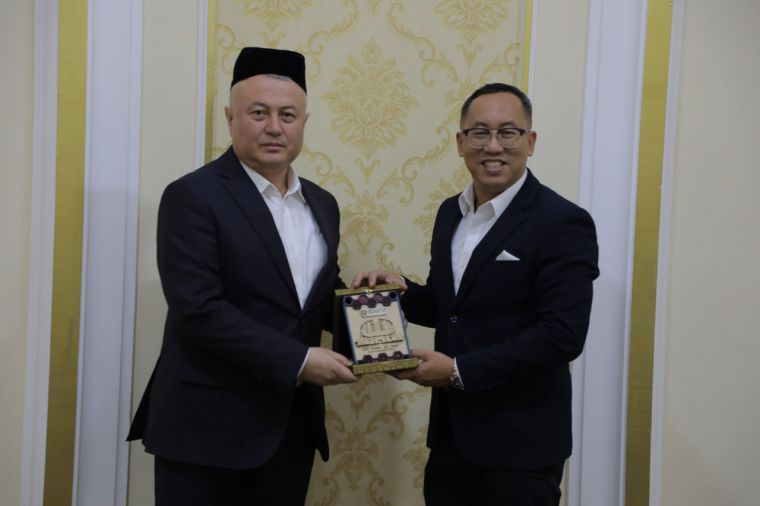
At the conclusion, both parties exchanged commemorative gifts, took group photographs, and wished each other continued success.
Muslim Board of Uzbekistan – Press Service

“Colombo Times”: Implementation of the Third Renaissance Idea becomes a state policy of Uzbekistan
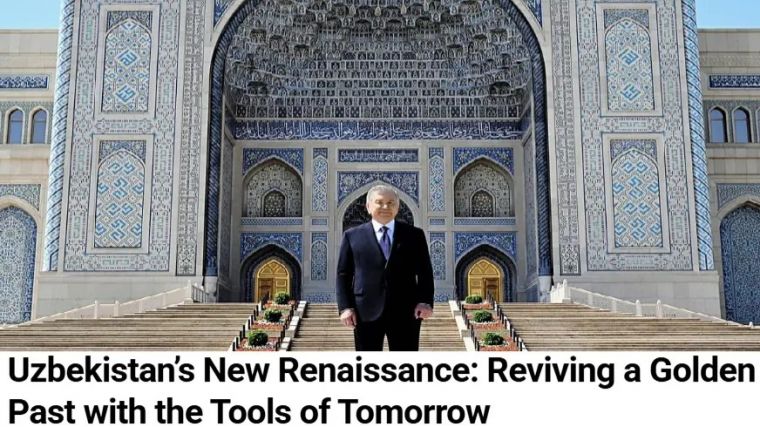
The Sri Lankan online publication Colombo Times has published an analytical article titled “Uzbekistan’s New Renaissance: Reviving a Golden Past with the Tools of Tomorrow”, reports Dunyo IA.
Publication, prepared by renowned Sri Lankan journalist Fazan Nawaz, focuses on the reforms carried out in Uzbekistan over the past decade under the leadership of President Shavkat Mirziyoyev, aimed at building the New Uzbekistan and implementing the idea of the Third Renaissance, as well as their significant outcomes.
“At the very heart of Central Asia, a quiet yet far-reaching revolution in its significance is taking place. This struggle is being waged not with weapons, but through manuscripts, museums and microchips. Under the leadership of President Shavkat Mirziyoyev, Uzbekistan is seeking to revive the glory of the medieval “Golden Age”, when such cities as Samarkand and Bukhara were leading centers of global science, poetry, and philosophy, author writes. - The distinctive feature of this process lies in the fact that Uzbekistan is actively using artificial intelligence and digital technologies to preserve, restore, and promote cultural heritage spanning more than a thousand years of history”.
Publication also highlights Uzbekistan’s rich cultural and historical heritage and the reforms being implemented to preserve it. It notes that this land has been the cradle of many outstanding scholars and thinkers throughout human history.
“Leader of Uzbekistan frequently refers to this historical heritage, emphasizing that Mirzo Ulugbek was not only a great scholar but also a statesman for whom science was the highest value. The current process of renewal is referred to by the Head of State as the ‘Third Renaissance’, viewing it as a nationwide project aimed at restoring Uzbekistan’s role as a center of science, education, and culture. According to historians, this term denotes a new stage of revival following two great periods of flourishing that had previously existed in the region”, article notes.
Article emphasizes that an important feature of Uzbekistan’s approach, distinguishing it from other countries, is the use of artificial intelligence not only as a tool for economic development but also as a means of protecting cultural heritage.
Fazan Nawaz concludes his article by stating that only time will show whether the “Third Renaissance” will be able to fully achieve its objectives. However, it is already clear today which path Uzbekistan is pursuing.