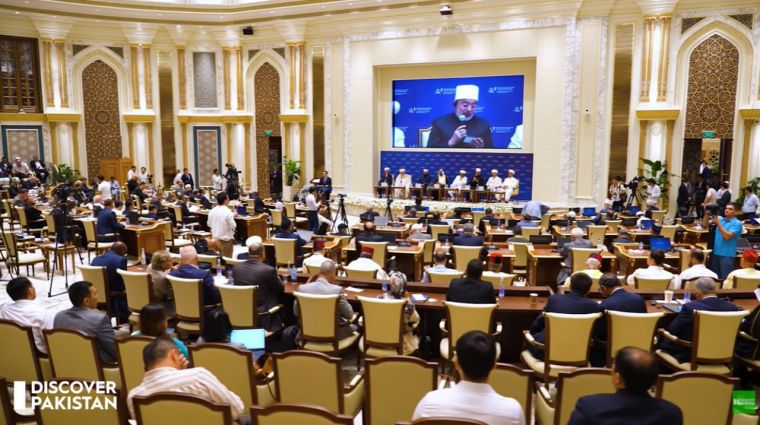
A special program dedicated to the First International Forum of Islamic Civilization held in Uzbekistan was broadcast on the popular Pakistani TV channel “Discover Pakistan”, reports Dunyo IA.
Television project in the Urdu language was prepared by the creative team of the “Discover Pakistan” TV channel, which participated in the work of the First International Forum of Islamic Civilization.
The program extensively covers the main outcomes of the forum, its international significance, as well as Uzbekistan's activities in preserving the heritage of Islamic civilization and the ongoing reforms in the country's spiritual and educational sphere.
It was noted that the forum has become an authoritative international platform, uniting renowned scholars, religious figures, as well as state and public figures from various countries around the world. It was emphasized that within the framework of the event, important initiatives were put forward aimed at promoting the ideas of religious tolerance, interethnic harmony and enlightened Islam, as well as strengthening spiritual and educational approaches in countering extremism and radicalism.
Particular attention in the program was paid to the large-scale reforms implemented in the spiritual and educational sphere under the leadership of the President of Uzbekistan, the study of the rich heritage of great thinkers, the support of scientific research, and the promotion of the unique legacy of Islamic culture and civilization on the international arena.
Audience was also presented with detailed information on the contribution of Samarkand, Tashkent and Termez as recognized centers of science and enlightenment to the development of world Islamic civilization.
Program included interviews with a number of foreign scholars and experts who participated in the forum. They noted that the forum plays an important role in further strengthening cultural and humanitarian cooperation between states and peoples, as well as in promoting the principles of religious tolerance and mutual respect.
According to the television program host, the initiatives put forward within the framework of the forum received positive assessment from the international community and contribute to the development of science, education and intercultural dialogue.
“Open and constructive foreign policy of Uzbekistan, as well as the country’s efforts to create international platforms for dialogue, received high praise”, program notes.
Special program broadcast on the “Discover Pakistan” TV channel allowed the Pakistani audience to become closer acquainted with the rich spiritual and enlightenment heritage of Uzbekistan and the substance of the First International Forum of Islamic Civilization.



 Iman
Iman  Prayer
  Fasting
  Zakat
Zakat  Haj
Haj  Qur`an
  Lessons of Islam
  Contact