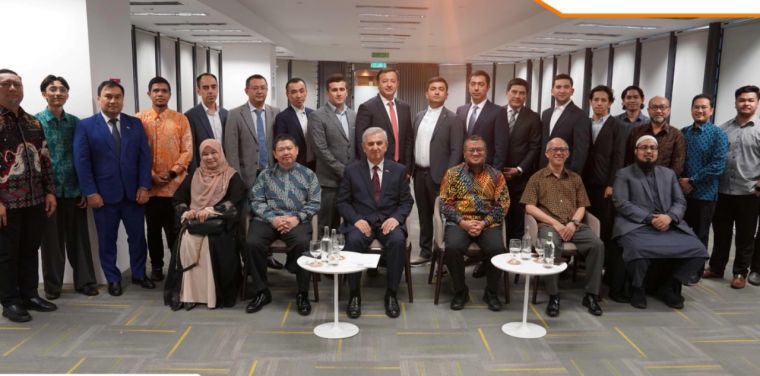
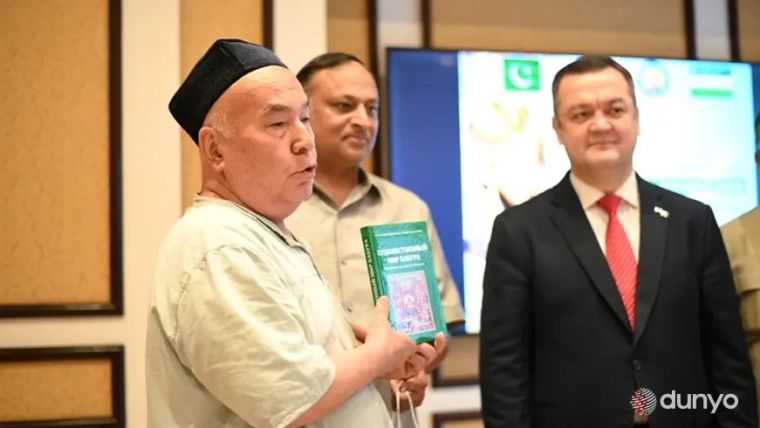
On the initiative of the Embassy of Uzbekistan in Pakistan, jointly with the Babur International Public Foundation, a visit of a delegation of Uzbek historians and Babur scholars took place, reports Dunyo IA.
Purpose of the trip is to study the historical and cultural heritage of Babur and the Baburids, historical sources, manuscripts, exhibits and artifacts preserved in Pakistan, as well as to develop scientific and cultural cooperation between the institutions of the two countries.
In Lahore, the delegation visited the Lahore Museum, Islamic Gallery, research institutions and historical monuments of the Baburid era. Issues of scientific and academic cooperation were discussed with the leadership of the University of the Punjab. Jointly with the Baburid Heritage Center at the university, a scientific and practical conference dedicated to the 500th anniversary of the Baburid dynasty was held.
In Islamabad, the Uzbek scholars visited the National Language Promotion Department of Pakistan, Quaid-i-Azam University, Allama Iqbal Open University, National Library of Pakistan and a number of scientific institutions, where they familiarized themselves with manuscripts, exhibits of the Baburid era, and other historical sources.
Delegation was also received by the Coordinator General of the OIC Standing Committee on Scientific and Technological Cooperation (COMSTECH), Muhammad Iqbal Choudhary.
The sides discussed deepening the study and preservation of the Baburid heritage, as well as its popularization within scientific circles and among the general public. An agreement was reached to hold a representative international scientific and practical conference.
The main event of the visit was the conference titled “Zahiriddin Muhammad Babur: Shared Civilizational Heritage and a Bridge of Uzbek-Pakistani Relations”.
Conference was attended by Farah Naz Akbar, Parliamentary Secretary for the Ministry of National Heritage and Culture of Pakistan; Alisher Tukhtaev, Ambassador of Uzbekistan; Ramzan Mughal, Head of the Babur Forum in Pakistan; as well as historians, Babur scholars and young researchers.
Participants emphasized the importance of the joint study of the historical and cultural heritage of Babur and the Baburids and the development of scientific ties between Uzbekistan and Pakistan.
As part of the further program of the delegation, research on a number of historical monuments of the Baburid era in the Punjab province is scheduled.



 Iman
Iman  Prayer
  Fasting
  Zakat
Zakat  Haj
Haj  Qur`an
  Lessons of Islam
  Contact