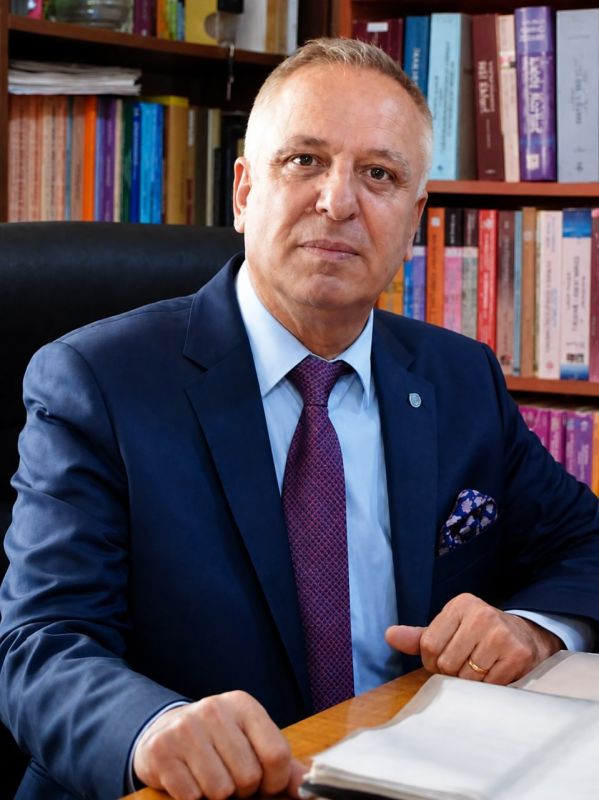
Ahead of the 35th Anniversary of the State Independence of Uzbekistan, Professor Zeki Kaymaz, a philologist and Member of the Scientific Council of the Turkish Language Institute, conveyed his sincere congratulations and best wishes through Dunyo Information Agency:
- First of all, I would like to congratulate the people of Uzbekistan on the 35th Anniversary of their Independence. Thirty-five years is a significant period. As a citizen of Türkiye, whose history spans more than a century, I wholeheartedly wish you to witness many more centuries to come and for Uzbekistan to experience wonderful and prosperous times.
Furthermore, looking briefly at history, we can see that Türkiye and Uzbekistan, particularly Central Asia, have shared close relations since ancient times. Especially during the national liberation war of Türkiye, we always remember with great gratitude the assistance rendered to us by the peoples of this region. These events are forever etched in our history.
Speaking of the present day, I would like to emphasize that the fraternal Uzbek people are, first and foremost, a brotherly nation and a brotherly republic to us, as well as an ancient and cherished friend.
Furthermore, as a citizen of Türkiye, I am immensely pleased with the current state and development processes of Uzbekistan. Every time we visit this beautiful land, we witness a magnificent and well-prosperous country. Your nation is home to numerous centers of culture and enlightenment. Undeniably, the roots of this civilization and cultural heritage trace back to deep antiquity.
It is particularly important to note that during the First Renaissance in Central Asia, which occurred in the early Middle Ages, and the Second Renaissance, which followed the era of Amir Temur, great civilizations were formed on these lands. It is of profound spiritual significance for us that the holy place of pilgrimage associated with the name of Imam al-Bukhari is located in Samarkand, and that Imam al-Maturidi was an outstanding scholar born and nurtured on this very soil.
To put it briefly, from a geostrategic perspective, over the next ten years, I see Uzbekistan as a bright star among the states of the Turkic world, particularly among the countries of Central Asia.
There are solid grounds for this. Firstly, it is a strong economy. Secondly, a rich culture and history with deep roots in the past. And, of course, the enduring friendship between Türkiye and Uzbekistan.
Our wish is that these bonds of friendship grow even stronger, and that the relations between the two nations in the cultural and economic spheres ascend to an even higher level.
Once again, I wholeheartedly congratulate Uzbekistan on its Independence Day and convey my most sincere and warmest greetings to the Uzbek people.
May the Almighty grant us all the opportunity to witness many more 35-year milestones together - in an atmosphere of success, development, prosperity and brotherhood.



 Iman
Iman  Prayer
  Fasting
  Zakat
Zakat  Haj
Haj  Qur`an
  Lessons of Islam
  Contact