Much efforts are being done to deliver the true and pure essense of Islam in our country. One of such actions was done in Pskent district last year when Usmankhan Alimov, the Chairman of Muslim Board of Uzbekistan and Khayrulla Turmatov, Chief Imam of Tashkent region put initial bricks to build the mosque “Usmat Ota”.
The capacity of the newly built mosque is 250-300 people and in the nearest future the construction of library, museum and parking lot are expected to be raised in an adjoining area.
In his speech Muftiy Usmonkhon Alimov congratulated muslims with this historical event. Later the guests were invited for a lunch organized by Akromov, District Mayor.
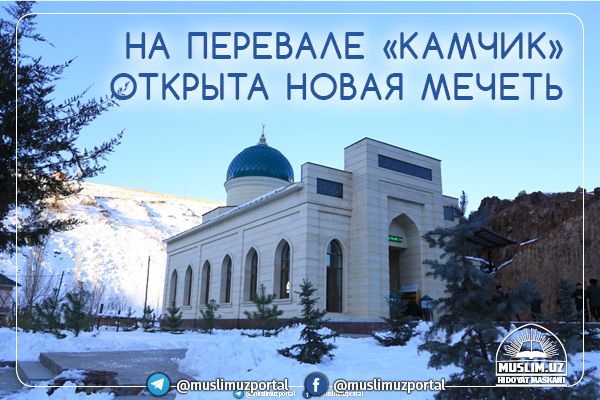
Another new mosque has been opened in Kuksaroy neighborhood, Okhangaron district, Tashkent region. The mosque “Islom nuri (Light of Islam)” is located just on the side of the highway of Kamchik mountain highway pass.
The opening ceremony was led by Muftiy Usmankhan Alimov, who in his speech expressed warm wishes to worshippers and made genuine prayers.
{gallery}//2018/01.01.2018/Islom_nuri{/gallery}
Press Service,
Muslim Board of Uzbekistan
The Central Bank expects to establish at least 10 full-fledged Islamic banks by 2030. Also, “Islamic windows” — branches providing Sharia financial services — will appear in three state banks. The Central Bank considers Islamic finance as a tool for withdrawing funds from the shadow economy.
Why is this important
According to a UNDP survey, 68% of Uzbekistan’s population does not want to use traditional banking services due to religious beliefs. Launching Islamic banks will expand financial inclusion, increase bank assets, and reduce the share of the shadow economy. This is the largest transformation of the financial system since independence.
What happened
Draft law
The document introduces the concepts of “Islamic banking activity”, “Islamic financial operations”, “investment deposit”, and others. A separate license is provided for Islamic banks. Classical banks will be able to organize “Islamic windows” if they have a license.
Islamic products: Murabaha (deferred trade financing), Mudaraba (investment partnership), Mushoraka (joint venture), Wakala (agency financing), Salam (prepayment of goods).
Features of regulation
Assessment of demand
The Deputy Chairman of the Central Bank clarified: when we talk about 50-60% of the population preferring Islamic finance, we are talking about those who prefer it. Those who categorically refuse traditional services are significantly fewer.
Context
Islamic finance prohibits the collection of interest (riba) and speculative operations. Instead, partnership models are used, where the bank and the client share profits and risks. Uzbekistan is a predominantly Muslim country (90%+ of the population), where a significant portion of citizens avoid traditional banks for religious reasons.
Creating 10 Islamic banks by 2030 is an ambitious task, given that there are currently around 35 commercial banks operating in the country. “Islamic windows” in state banks will allow large players (Uzpromstroybank, Halyk Bank, Asaka Bank) to enter a new segment of clients without creating separate structures.
The Central Bank sees Islamic finance as a tool for combating the shadow economy: religiously motivated citizens who do not trust traditional banks will be able to legalize funds through Sharia products.
A separate tax regime may include benefits for Murabaha-type operations, where the bank formally purchases goods and resells them to the client with a markup — to avoid double taxation.